Six months after closing its all-stock combination with Udemy, Coursera is laying off about 10% of its global workforce and has adopted a "poison pill" to guard against a takeover. Here is what its filings say.
Chegg’s third-quarter revenue fell 40% from a year earlier to $46.5 million, and it expects $38 million to $40 million this quarter. Its chief executive says AI “hit our business hard” as the company pivots to employability.
A plain-English guide to ITI’s VPAT® 2.5Rev: the four editions, the required report fields, the five conformance terms, and how to test and fill out a VPAT for an edtech product. Includes a free completed sample report.
The AFT and UFT’s AI Safety and Privacy Standard for Schools bans training on student data, selling it or using it for ads, and lets districts end contracts when vendors break the rules. A guide to which AI companies have signed and how districts can use it.
Google is switching off Gemini, Gemini Notebook, Gemini in Classroom and Search for K-12 student accounts until administrators turn them on. The catch: there is no Search without AI. A plain-English guide to the controls, the grade-level options and what districts are doing.
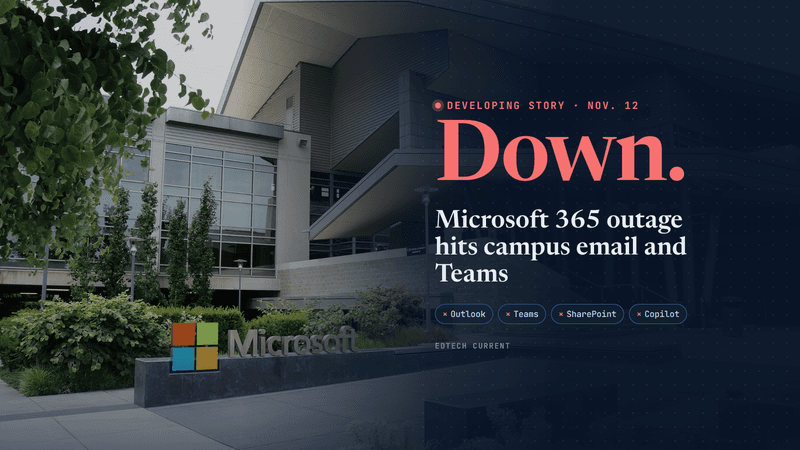
A global Microsoft 365 outage that began Nov. 12 took down Outlook and Teams at universities, community colleges and school districts into Friday. Here is what Microsoft says went wrong, how campuses were hit and what they told students and staff.
Edcafe turns a topic or a teacher’s own materials into quizzes, chatbots, flashcards, slides and Mini Apps, then collects student work in one place. Its free plan has unlimited AI generations; Pro is $7.99 a month billed annually. We checked its pricing, privacy policy and evidence.
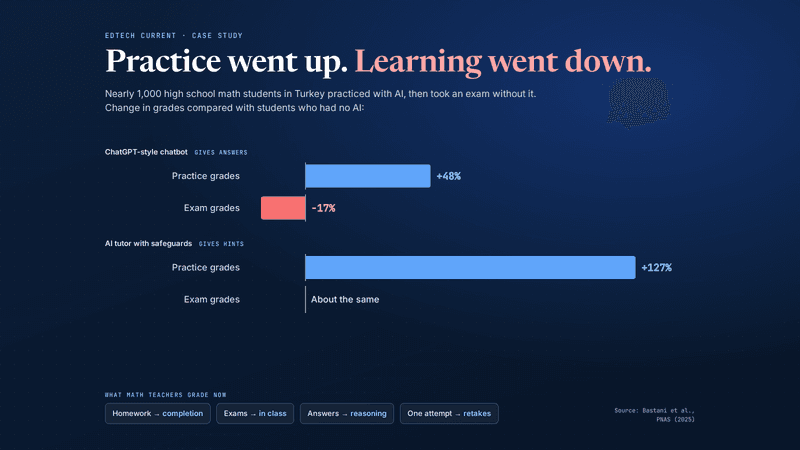
AI can solve most homework problems, so a correct answer no longer shows who learned the math. Here is how a Berkeley mathematician, a California high school teacher, a math educator’s 80/20 policy and Columbia’s math department are changing what they grade.
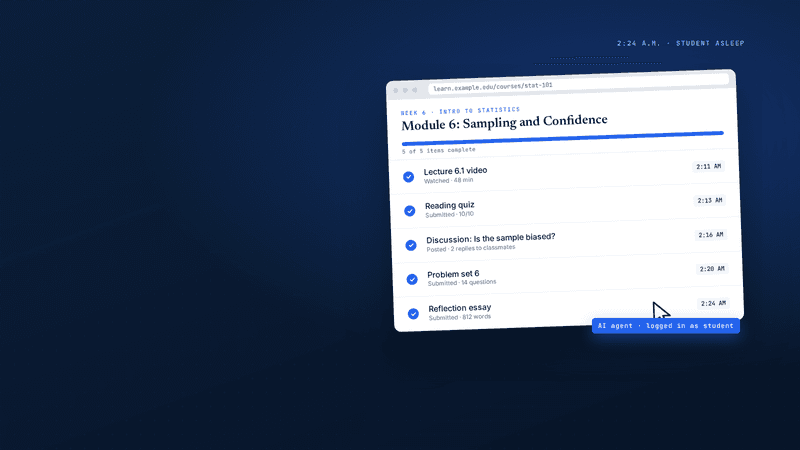
An AI agent called Einstein promised to log into Canvas, watch lectures and submit homework while students slept. It was taken down within days, but the tools behind it are still available, and colleges are rethinking online courses.
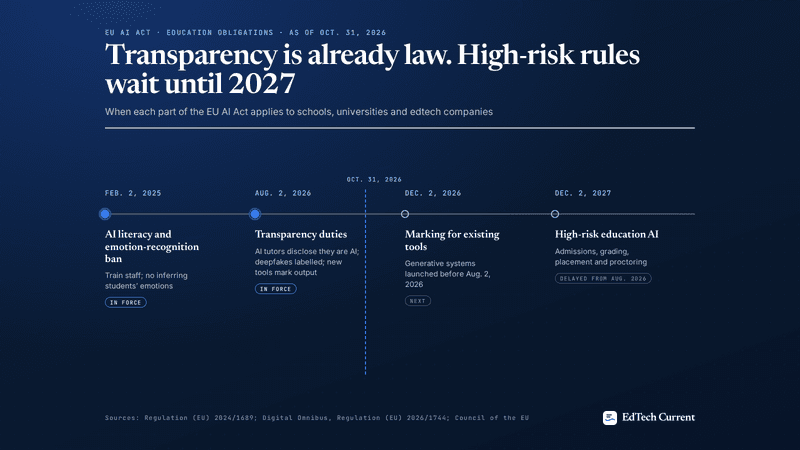
Since Aug. 2, 2026, AI tutors in the EU must say they are AI, generative tools must mark their output, and schools must label deepfakes. Here is what applies now, and what can wait until 2027.
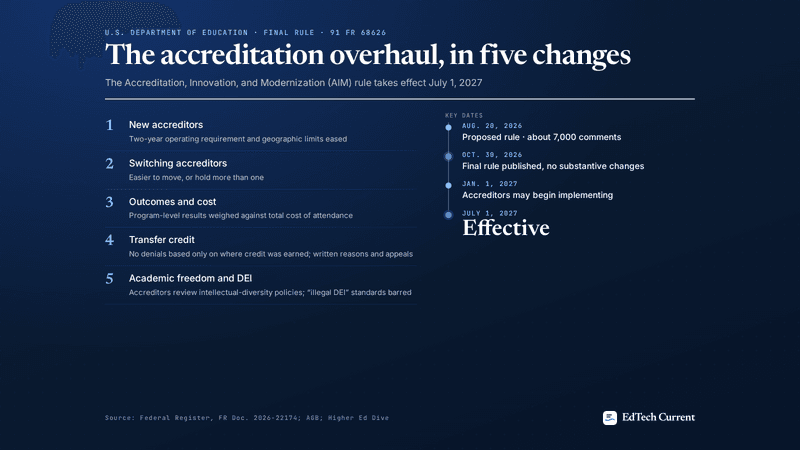
The final Accreditation, Innovation, and Modernization rule was published Oct. 30 and takes effect July 1, 2027, with almost no changes from the proposal. Accreditors say their core concerns stand.
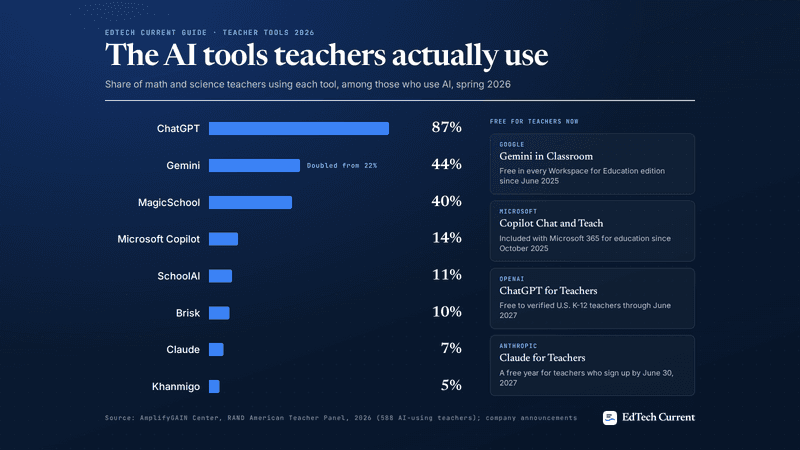
Teachers still do most of their work in Google Classroom, Canvas and a few quiz games, and ChatGPT, Gemini and MagicSchool lead AI use. We compared the tools on cost, evidence, privacy ratings and accessibility.