Subash Parajuli is the founder and chief editor of EdTech Current, setting the site’s editorial direction and reviewing its reporting and guides on education technology for schools, universities and edtech buyers.
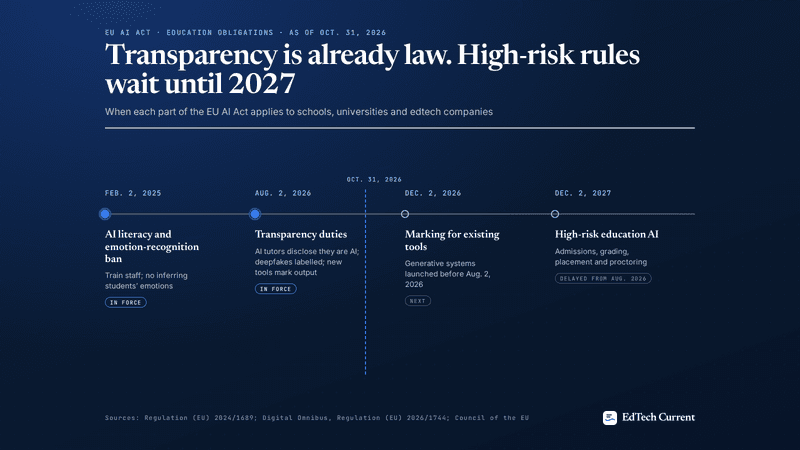
Since Aug. 2, 2026, AI tutors in the EU must say they are AI, generative tools must mark their output, and schools must label deepfakes. Here is what applies now, and what can wait until 2027.
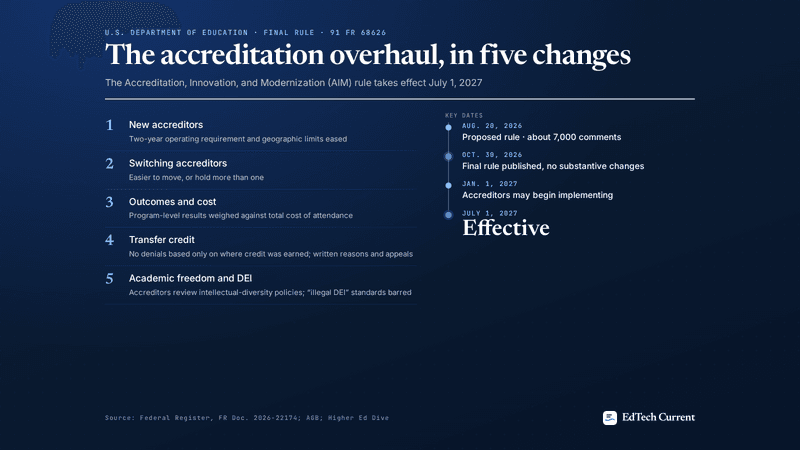
The final Accreditation, Innovation, and Modernization rule was published Oct. 30 and takes effect July 1, 2027, with almost no changes from the proposal. Accreditors say their core concerns stand.
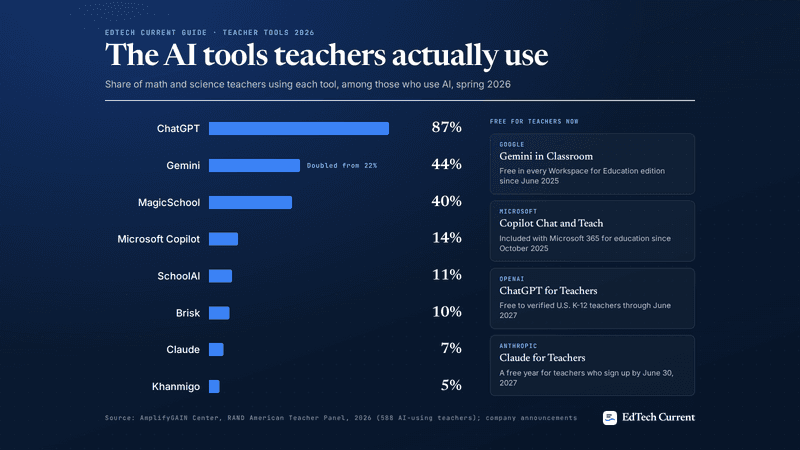
Teachers still do most of their work in Google Classroom, Canvas and a few quiz games, and ChatGPT, Gemini and MagicSchool lead AI use. We compared the tools on cost, evidence, privacy ratings and accessibility.
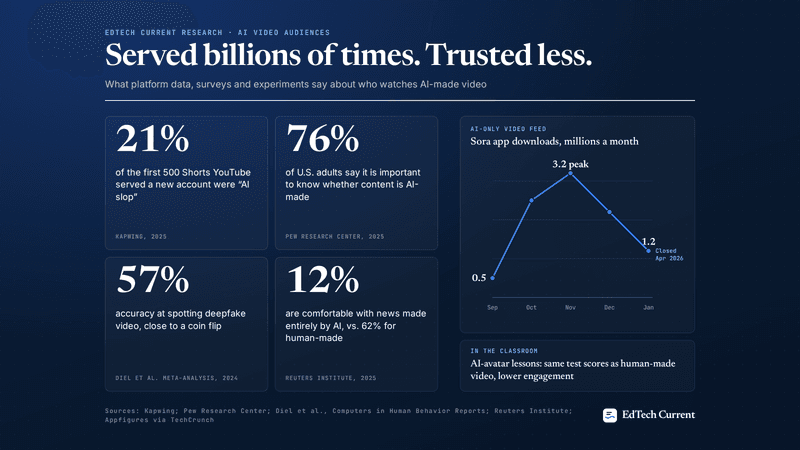
AI-only YouTube channels draw billions of views, but feeds made only of AI video faded fast. Labels cut trust, and students taught by AI avatars score about the same but engage less.
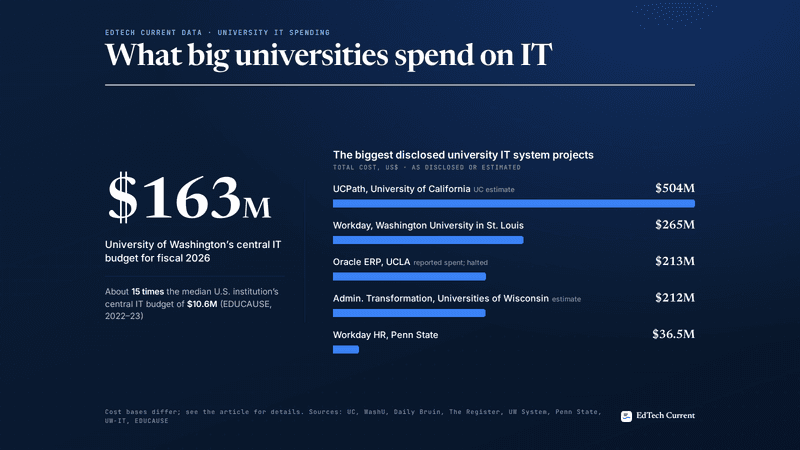
The University of Washington’s central IT budget is $163 million, about 15 times the median. The University of California put its payroll system at $504 million, and WashU spent $265 million on Workday. Here is what the documents show.
Eight states filed coordinated lawsuits accusing OpenAI of designing ChatGPT to foster dependency and misleading parents about its safety, the first action of its kind against an AI company. OpenAI says it has industry-leading protections.
Common Sense Media says ChatGPT for Teens gives parents false confidence: alerts didn’t reach parents in new accounts, and one in four crisis referrals were missed. OpenAI says the testing was flawed.
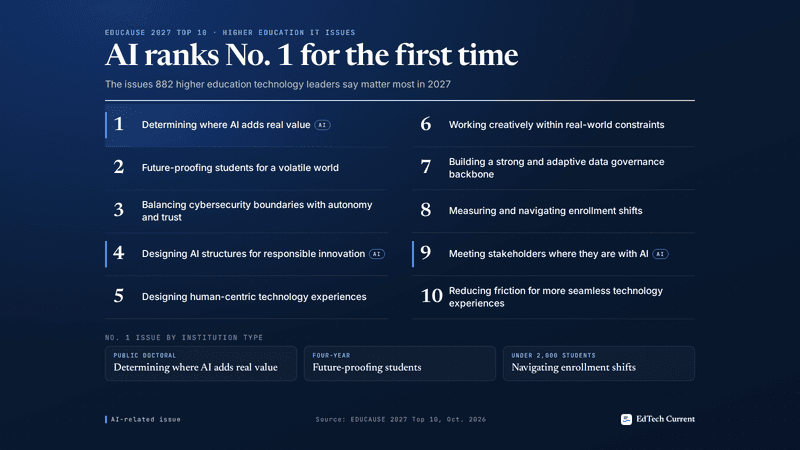
For the first time, an AI issue leads EDUCAUSE’s annual Top 10. The 2027 list moves campuses from experimenting with AI to proving its value, with accessibility, data governance and enrollment close behind.
Public colleges must make websites, apps and course materials meet WCAG 2.1 AA. The deadlines moved in 2026 and are being challenged in court. Here is every rule, every exception, and a step-by-step plan.
Clery compliance is a year-round system: counting crimes, warning the campus, training staff and documenting every decision. Here is how institutions organize it, the tools they use, and two free templates to start with.
The Chi Phi case is now in the hands of New York’s attorney general and a trustee-appointed review led by Sally Yates, and Cornell has suspended fraternity parties for the year. Here is the timeline.
Fluent answers feel like understanding. Feeling like we understand makes us lean on the tool more, and leaning on it more leaves us understanding less. Schools need to break that loop before it closes.